

The Rise of Social Gambling & Community Betting


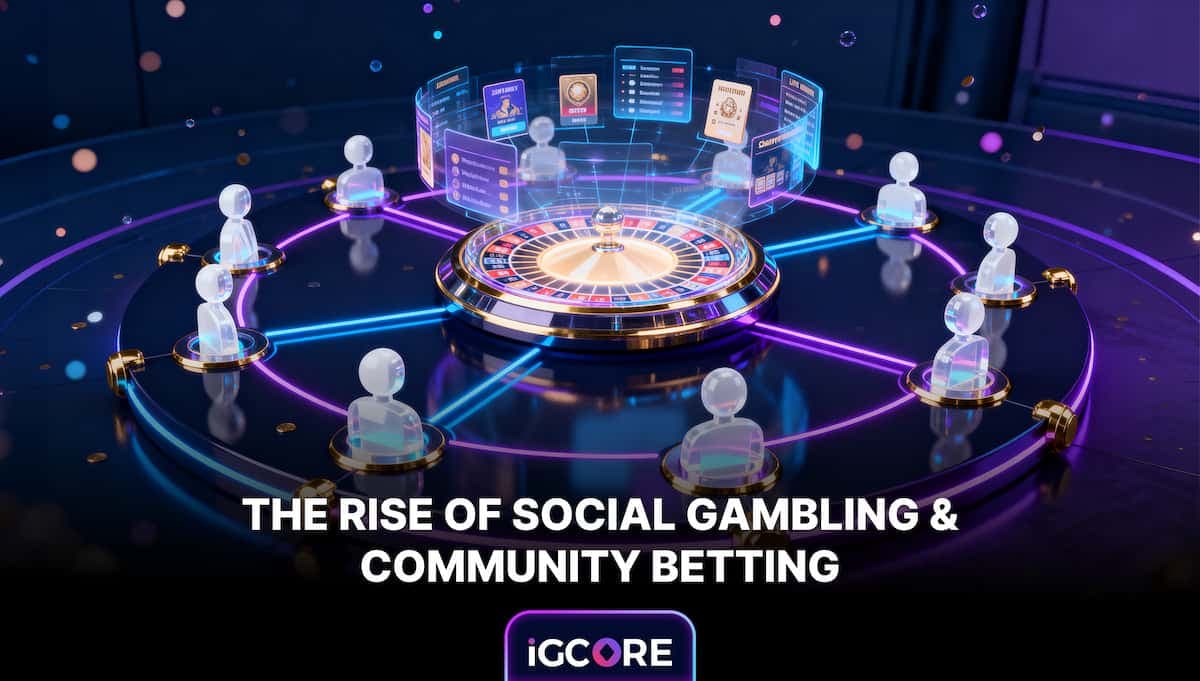
The online gambling industry has undergone a remarkable transformation over the past decade. It has evolved into a vibrant, interactive, community-driven experience. Social gambling and community betting are no longer border concepts. On the contrary, today they are defining the ways players discover, engage with, and remain loyal to gaming platforms.
This shift is not accidental. It reflects broader changes in how younger generations consume entertainment, interact with digital products, and form communities online. From shared jackpots to live-streamed wagering, from bet-sharing social feeds to AI-powered personalization, the gambling landscape in 2026 looks more like a multiplayer game than a traditional casino floor.
For operators and platform providers full-sided realization and overview of this picture is a commercial imperative. Below we explore what social gambling is, why it is growing so rapidly, what features define leading platforms, and how operators can position themselves to benefit from this cultural shift.
What Is Social Gambling?
Social gambling refers to gambling experiences which involve components from the social life of players such as interaction, community, shared outcomes, and collaborative or competitive play. Specifically, players in social gambling environments are connected to one another through shared feeds, leaderboards, group challenges, live chat, and community events.
It should be borne in mind that social gambling is not always about free-to-play or non-monetary practice. Vice versa, many social gambling platforms operate with real money wagers. So, what is their distinctive feature? It is rather the additional social layer built into the gambling environment, which transforms a transactional product into an engaging community. Let us have a closer look at the differences between the two.
Difference Between Traditional Online Gambling & Social Gambling

Traditional online gambling platforms are built around individual gameplay loops: a player deposits, wagers, wins or loses, and withdraws. The interaction is between the player and the game engine. There is minimal connection between players, limited communication tools, and virtually no community infrastructure.
Whereas, social gambling overcomes and exceeds this model. The player'sexperience is shaped not just by the outcome of a bet, but by how that outcome is shared, celebrated, or commiserated within a community. Consider the difference between spinning a slot in isolation versus participating in a group jackpot challenge with a live leaderboard, real-time chat, and a shared prize pool that grows as more players join.
Social gambling transforms wagering from a private transaction into a shared event - and that distinction changes everything about player behavior, retention, and lifetime value.
How Community Betting Works
Community betting takes the social layer further by structuring bets around group participation. Players can follow other bettors, copy their wager strategies, contribute to syndicate bets, or compete in prediction leagues. Platforms that support community betting often include features such as:
- Public bet slips that allow other players to view, discuss, and replicate wagers
- Syndicate or group betting where multiple players pool stakes on a single outcome
- Prediction leagues where players compete on the accuracy of their forecasts over a season or event series
- Tipping systems where experienced bettors share picks, sometimes monetized through follower models
Why Social Gambling Is Growing So Fast
Influence of Online Gaming & Streaming Culture
The rise of social gambling cannot be understood in isolation from the broader gaming and streaming culture that has defined digital entertainment for the past ten years. Platforms like Twitch, YouTube Gaming, and Discord have popularized the idea of watching others play, commenting in real time, forming communities around shared interests, and building social relationships with content creators.
Gambling content, particularly slots streams and sports betting analysis, comprise a significant share on these platforms. Viewers do not just watch; they engage, ask questions, make predictions, and often open their own accounts inspired by what they see. This has naturally blurred the line between passive entertainment and active participation.
Gen Z and Millennial Player Expectations
For players born after 1990, the concept of doing anything online without a social component feels incomplete. Social media, multiplayer gaming, group chats, and collaborative apps have been the default mode of digital interaction since adolescence. When these players encounter a traditional online casino with no chat, no community, no social proof, and no way to share their experience, it feels outdated.
Millennial and Gen Z players expect acknowledgment, progression systems, visible community activity, and the ability to show off wins or discuss strategy. They are more likely to remain loyal to platforms that make them feel part of something larger than a solo wagering session.
The Shift Toward Interactive Entertainment
The entertainment industry broadly has shifted toward interactivity. Netflix introduced voting mechanisms in interactive films. Spotify built social listening features. Video games have long incorporated social systems. In this context, a gambling platform that offers no interaction is competing at a structural disadvantage against products that deliver genuine engagement.
Interactive entertainment generates longer session times, stronger emotional investment, and more powerful word-of-mouth marketing. Social gambling platforms tap directly into this dynamic.
Role of Mobile Gaming & Real-Time Communication
Mobile devices have made gambling accessible anywhere, but they have also created an expectation of real-time responsiveness. Push notifications, instant messaging, and live updates are more than common for mobile users, being an indispensable part of their virtual experiences. Social gambling platforms that deliver real-time alerts about group challenges, friend activity, or live events are meeting players where they already are, in the flow of daily mobile usage.
The convergence of mobile gaming habits (short sessions, persistent progression, social loops) with real-money wagering has created a product category that fits naturally into how younger players already spend their time.
Key Features of Social Gambling Platforms

In-Game Chat & Live Interaction
Live chat during gameplay transforms the experience from solitary to communal. Whether players are chatting during a live dealer session, reacting to a jackpot win in a slot tournament, or discussing a match outcome in a sportsbook, real-time communication creates shared moments that deepen engagement. Leading iGaming platforms invest heavily in moderated, feature-rich chat environments that support emojis, reactions, GIFs, and direct messaging alongside public feeds.
Shared Jackpots & Group Challenges
Shared jackpots are among the most powerful social mechanics in gambling product design. When players know that a jackpot pool grows with collective participation, their wagering behavior is influenced by the behavior of others and creates natural virality and urgency. Group challenges extend this logic: players are invited to collectively achieve a wagering milestone, unlock a bonus, or compete as a team against other groups. These mechanics generate organic re-engagement and provide a reason to return outside of individual winning or losing.
Betting Communities & Social Feeds
Social feeds bring the logic of Twitter or Instagram into the betting product. Players can follow high-performing bettors, see a stream of recent wins and bets across the community, post their own results, and receive likes or comments on their activity. For sportsbooks, this is particularly powerful. Experienced bettors become mini-influencers within the platform ecosystem, and following their behaviour creates a retention mechanism that has nothing to do with promotions or bonuses.
Gamification & Reward Systems
Points, badges, level progressions, streaks, achievements, and leaderboards are at the core of gamification. Social gambling platforms apply these systems to reward not just wagering volume but social engagement: referring friends, posting wins, completing group challenges, participating in community events, and logging consecutive days of activity. Gamification creates progress narratives that give players a reason to return beyond chasing the next win.
Social Gambling vs Traditional Online Casinos

User Engagement Comparison
The data on engagement differences between social and traditional gambling platforms is compelling. Social platforms consistently report higher daily active user rates, more frequent return visits, and longer average session times. Traditional platforms rely on deposit bonuses and promotions to drive back visits.
Social platforms generate organic return through community activity, social notifications, and ongoing challenges that exist independent of promotional calendars.
Retention & Session Duration
Retention is the most important metric for any gambling platform'slong-term profitability, and social mechanics have an obvious positive effect. The social graph and progress data represent switching costs that pure-play traditional casinos simply cannot replicate with welcome bonuses alone.
Session duration also extends meaningfully when social mechanics are present. A player who browses a social feed, checks a leaderboard, comments on a friend's win, and then places a bet has a fundamentally longer and more svaried session than one who deposits, spins, and exits.
Revenue Impact for Operators
Longer sessions and stronger retention translate directly into higher player lifetime value. Studies across the gaming and gambling industry consistently show that socially engaged players wager more frequently, deposit more consistently, and have lower churn rates than non-social users. For operators, the revenue impact of social features is not a nice-to-have but a material commercial advantage. Platforms that have invested in social infrastructure report significantly improved metrics across GGR, NGR, and player LTV within 12 to 24 months of implementation.
Challenges & Risks of Social Gambling
The growth of social gambling is not without significant challenges. Regulatory complexity is perhaps the most pressing: social mechanics that involve copying bets, following tipsters, or participating in group wagering may trigger additional regulatory requirements in certain jurisdictions, including financial advice frameworks or specific licensing categories. Operators must navigate these requirements carefully as they build social features.
Responsible gambling is a critical consideration. Social mechanics that create peer pressure around wagering behavior, that celebrate wins publicly without equivalent visibility for losses, or that use gamification to encourage compulsive play patterns must be designed and monitored with care. The reputational and regulatory risks of social gambling features that facilitate harm are substantial, and responsible operators invest in safeguards including spending limits, social activity visibility controls, and community moderation.
Data privacy is another dimension: social feeds, following relationships, and shared bet histories create significant personal data that must be handled in compliance with GDPR, and other applicable data protection frameworks. Players should have meaningful control over what they share and with whom.
Finally, community quality management requires ongoing investment. A social gambling platform is only as good as its community. Toxic behavior, fraudulent tipping, bot accounts, and low-quality content can degrade the experience for all participants. Building and maintaining a healthy, high-quality community requires dedicated resources and thoughtful product design.
How Operators Can Benefit From Social Gambling Trends

For operators who move decisively, the social gambling shift represents a significant commercial opportunity. The starting point is platform selection: not all gambling platforms are built to support social features. Building on a platform designed with social functionality from the ground up is far easier than modifying and readjusting an existing platform later.
Operators should evaluate platform providers on their native social capabilities: real-time communication infrastructure, gamification engines, social feed architecture, syndicate betting support, and AI personalization tools. The right platform partner reduces time-to-market for social features and provides ongoing product development as the market evolves.
Content strategy matters alongside technology. A social gambling platform needs community managers, content creators, and event calendars that give players reasons to engage beyond individual betting sessions. Operators who invest in communities see multiplying returns as their social graph grows.
Acquisition strategy should evolve in parallel. Social gambling platforms are better suited to influencer partnerships, streamer integrations, and community-led growth than traditional affiliate models. Players acquired through community channels tend to have higher lifetime values and stronger social network effects, introducing additional players through organic sharing behavior.
The operators who will win the next decade of online gambling are those building communities, not just customer databases.
The Future of Social Gambling & Community Betting
Looking ahead, several emerging trends will further accelerate and evolve the social gambling landscape. Many of these developments, including AI personalization, immersive experiences, and next-generation platform architecture, are explored in our article on Future of iGaming: Key Trends & Innovations Shaping 2026 & Beyond.
Web3 technologies, which are blockchain-based ownership, tokenized rewards, and decentralized community governance, are beginning to intersect with gambling, offering new models for community participation and value sharing that could deepen player investment in platform ecosystems.
Augmented and virtual reality will eventually bring the shared physical experience of a casino floor into digital spaces. Imagine a virtual poker room where friends across different countries play together with spatial audio, visible avatars, and social interactions that mirror the physical experience. While mass adoption is still years away, platforms that begin experimenting with social VR experiences now will have meaningful advantages as hardware becomes more accessible.
AI-generated social experiences - personalized tournament structures, AI-mediated community events, dynamically adjusted group challenges - will become increasingly sophisticated. The gap between what a platform can offer at scale and what a human community manager could deliver will narrow as AI capabilities advance.
Regulation will continue to evolve, and operators should expect increasing scrutiny of social gambling mechanics from gaming authorities globally. Those who build responsible gambling frameworks into their social features from the beginning will be better positioned to navigate regulatory change without costly product rebuilds.
The convergence of gambling with social media, gaming culture, streaming, and mobile technology is not a temporary trend - it is a structural shift in how wagering products are designed, delivered, and consumed. The platforms and operators that understand and embrace this shift today are building the foundations of market leadership for the decade ahead.
Social gambling and community betting are reshaping the online gaming industry from the ground up. Driven by the social expectations of younger player cohorts, the influence of streaming and gaming culture, and the commercial imperative to build retention beyond promotional spend, social mechanics have moved from differentiating features to core product requirements.
For platform providers, the mandate is clear: build social infrastructure - real-time communication, shared experiences, gamification, community feeds, and AI personalization - as native capabilities rather than optional add-ons. For operators, the opportunity is equally clear: invest in community as a competitive asset, choose platform partners that enable social product development, and acquire players through channels that deliver social network effects.
The players who are just entering the gambling market today grew up in social digital environments. They will expect social gambling experiences as the default. The operators and platforms that deliver on that expectation will earn their loyalty. Those that do not will increasingly find themselves competing on price and bonus spend alone - a race to the bottom in a market where community is the new competitive moat.
The rise of social gambling is not a wave to watch from the shore. It is the future of online gaming, and it is arriving now.

- What Is Social Gambling?
- Difference Between Traditional Online Gambling & Social Gambling
- How Community Betting Works
- Why Social Gambling Is Growing So Fast
- Key Features of Social Gambling Platforms
- Social Gambling vs Traditional Online Casinos
- Challenges & Risks of Social Gambling
- How Operators Can Benefit From Social Gambling Trends
- The Future of Social Gambling & Community Betting
Related Articles

Future of iGaming: Key Trends & Innovations Shaping 2026 & Beyond
Read more...