

Why Player Retention Will Matter More Than Acquisition in 2027



While many operators have a clear vision of how much a new player costs to invite and engage, much fewer can tell you what a player who stays for two years is worth. That lack of attention is where a lot of money quietly disappears, and in 2027 it will be harder to ignore.
Why Acquisition Alone Is No Longer Enough?
Acquisition has never been cheap, but it is getting more expensive these days. Affiliate deals are more competitive, paid channels are crowded with the same few big brands, and regulators in many markets are narrowing what operators can say and where they can say it. Each of the aspects mentioned pushes the cost of a depositing and actively playing user higher.
Then there’s what happens after the sign-up. A large share of new players never come back after the first week. Some deposit once, use the welcome offer, and move on to other platforms for the next promotions. If your model depends on constantly refilling the top of the funnel, you are paying full price for a lot of people who were never going to stay.
Retention changes that arithmetic. A player who remains active over many months costs far less to keep than a new one costs to find, and tends to spend more steadily. That’s not a new idea, and should be reconsidered by the operators from novel perspectives offered by advanced platforms.

What Actually Keeps Players Active?
The answer “bonuses” sounds very realistic and permits to wrap up the discussion at that point. Definitely, bonuses matter, but they are rarely the reason someone stays. Players tend to stay when the experience is easy, when the offers feel like they were meant for them, and when nothing gets in the way of what they came to do.
In practice, that comes down to a number of things: a product that loads fast and behaves predictably, deposits and withdrawals that don’t turn into a small ordeal, communication that is timely instead of noisy, and a sense that the operator actually knows what the player likes. Miss on any one of them and the player has an easy exit, because the next site is one tap away.
Personalization and Player Management
Applying a one-size-fits-all approach for the retention of players is quite an ineffective solution. Hence, sending the same types of promos or bonus offers to every single user is mostly ineffective, although cheap. Say, a player who bets on football every weekend doesn’t need a casino reload offer on a Tuesday. A slots player who has gone quiet for ten days needs something different from someone who logs in daily.
This is where player management stops being a back-office function and becomes a retention tool. Segmenting by behavior, preferred product, deposit pattern and activity level lets an operator send fewer messages that land better. It also helps with the less comfortable side of the job: spotting early signs of disengagement, and, just as importantly, identifying players whose activity suggests they need support rather than another promotion.
Relevance matters more than frequency. A good CRM setup is less about volume and more about timing, which is often the difference between a message that gets read and one that gets muted.
Retention Starts With Product Experience
No amount of clever CRM will rescue an unintuitive product. If the sportsbook lags during a live match, if the casino lobby is hard to navigate on a phone, if a bet slip takes one step too many, players notice. They may not complain. They just drift.
Mobile deserves particular attention here, since for many markets it’s now where most play happens. That means more than a responsive layout. It means fast load times on average connections, a clean path from login to bet, and payment flows that work without forcing players to switch contexts or retype details.
Payments are worth a separate mention because they’re one of the most underrated retention factors. Slow withdrawals, limited local methods, or unexplained declines damage trust quickly, and trust is very hard to rebuild once it cracks. Offering the methods your players actually use, and processing them reliably, does more for loyalty than most promotions will.

The Role of Sportsbook + Casino Cross-Selling
One of the most practical retention levers is simply giving players more reasons to stay in your ecosystem. A sports bettor who also plays a few casino games during quiet periods is much less likely to leave when the season ends. A casino player who tries a live bet during a big match has found a second reason to open your app.
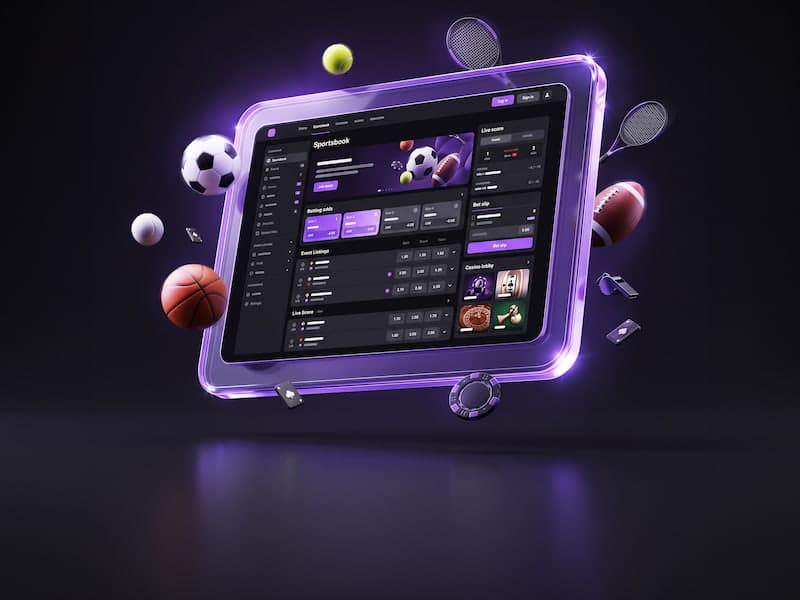
Cross-selling only works, though, when the two products feel like parts of the same place. That means one account, one wallet, one login, and a player view that shows the full picture of how someone plays. If the sportsbook and casino run as separate systems stitched together after the fact, the player feels the seams, and so does your data team.
This is the thinking behind iGcore’s integrated Sportsbook and Casino ecosystem, where both products work within one environment instead of being joined together later. For operators, the benefit goes beyond convenience for the player. A unified setup gives you a single view of activity, so you can see when a sports player is ready for a casino offer rather than guessing.
Why Technology Will Define Retention in 2027
Everything above depends on infrastructure. Personalization needs clean, connected data. Fast, stable products need a platform that can handle high traffic. Responsible, well-timed communication needs reporting that tells you what’s really happening, not what happened last month.
Operators who treat retention seriously need to consider a number of questions as related to their technology. Can we see player behavior across products in one place? Can we adjust bonuses, segments and workflows without waiting weeks for a development cycle? Does reporting give us something we can act on? Is the platform flexible enough to adapt as markets and regulations shift?
Platform flexibility is the one that often gets overlooked until it hurts. Markets change, player expectations change, and an operator locked into rigid tooling ends up reacting slowly. Solid player management, clear reporting and a platform that adapts rather than breaks up give teams room to test ideas and keep what works.
This is the area where iGcore focuses its platform: player management and reporting that cover sportsbook and casino activity together, and enough flexibility for operators to adjust their setup as their players and markets change. When those pieces sit in one system, retention work becomes part of daily operations, not a separate project.
None of this makes acquisition irrelevant. New players will always be the lifeblood of growth. But in 2027, the operators who come out ahead are likely to be the ones who stop treating a player’s first deposit as the finish line, and build the product, data and communication around what comes after it.
Building for retention, not just acquisition? iGcore provides Sportsbook, Casino, Turnkey and Agent Management solutions designed to help operators create scalable and engaging player experiences.

Related Articles
Why Casino Operators Should Add a Sportsbook in 2027?
Read more...

Everything about iGaming in Latin America 2026
Read more...

What is a White Label Casino?
Read more...