

Why Casino Operators Should Add a Sportsbook in 2027?


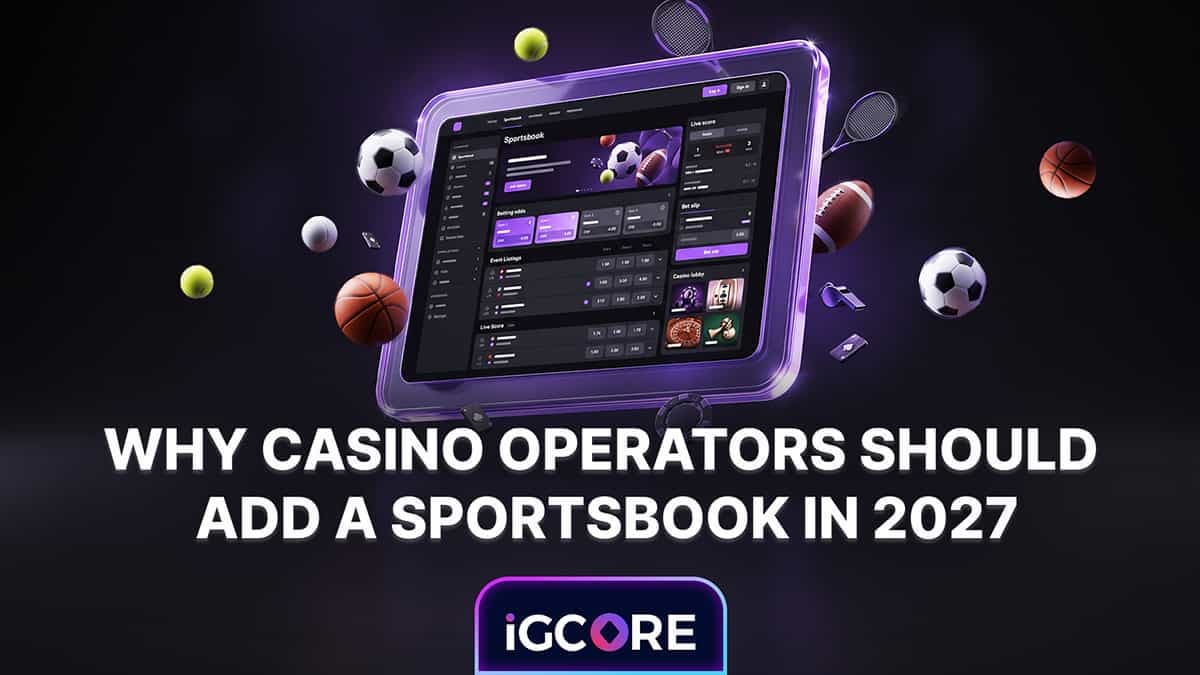
In 2027 established casinos are poised to address very specific challenges of the market in order to have sustainable growth. It is quite rarely about “how to attract or find new players”. The central aspect now is “how to squeeze out more value and use the potential of the platform to the full extent". In other words, the resources available are to be used strategically.
Adding a sportsbook answers both sides of that question. It opens a second revenue line, gives existing players a reason to log in on days when they are not in the mood for slots, and makes the brand relevant to an audience most casino-only operators never reach. It is also no longer a heavy engineering programme: modern sportsbook software is built to be integrated into an existing iGaming platform, which turns the decision to add a sportsbook to an online casino into a commercial one rather than a technical gamble.
Why Sportsbook Is a Growth Opportunity for Casino Operators
In recent years, casino-only acquisition has become quite expensive. Affiliate inventory is competitive, bonus expectations are high, and differentiation between slot lobbies is thin because most operators license the same content from the same studios. A casino sportsbook changes that equation. It gives the brand something structurally different to offer, and it gives marketing a calendar of fixtures, seasons and tournaments that casino content does not have.
There is a defensive argument too. If your players want to bet on football, they will find somewhere to do it, and every bet placed elsewhere is a session, a deposit and a payment relationship handed to a competitor. Operators expanding into sports betting are often protecting existing value as much as chasing new value.
Key Benefits of Adding a Sportsbook
New revenue opportunities
Sports betting has different margin characteristics from casino: hold percentages are lower, but volumes are high and revenue depends less on a small group of high-value casino players. Adding sports betting software diversifies where gross gaming revenue comes from, which reduces exposure to a bad month in the casino vertical or to regulatory changes that hit one product type.

Higher player engagement
Casino sessions are short and can happen at any time. Sports betting sessions are anchored to events, which pulls players back on a schedule the operator can predict. A bettor who places a Saturday accumulator returns to check results, cash out or bet in-play, and live betting turns a ninety-minute match into an extended session with repeated touchpoints.
Better retention
Multi-product players are consistently more durable than single-product players. Once a player uses the same wallet for sports and casino, switching brands means giving up more than one habit.
Casino-to-sportsbook cross-selling
Cross-selling works in both directions, and it is where an existing casino has a real advantage over a sportsbook startup. You already have the database, the payment relationships and the behavioural data. A free bet offered to a casino player during a major final costs far less than acquiring a new bettor from scratch.
Wider player audience
Sports betting can be popular with the layers of population who are sport-concentrated only. This includes players who would never open a slots lobby but will bet on their national team. That sector of players is driven through different channels, expanding the brand’s market significantly.
More opportunities around major sporting events
Major tournaments create acquisition windows with no casino equivalent: search volume rises, media attention is free, and casual players register who would not otherwise have opened a gambling account. Operators whose sportsbook platform is live and stable ahead of those windows capture the traffic. Operators still integrating during them do not.
Build a Sportsbook or Integrate an Existing Solution?
Building sportsbook technology in-house is possible, while for most casino operators is not reasonable or worth efforts and resources.
A competitive sportsbook is a broad product including odds and data supply chain, a pricing and trading operation, a risk management layer, a settlement engine, a front end that performs under spikes of concurrent in-play traffic. Moreover, each new market requires specialist staff who are scarce and expensive, and the work never finishes.
The real cost comes from various aspects, such as development budget, many months during which the casino business funds a project instead of earning from it, plus the risk that the finished product launches with shallower numbers than expected.
Sportsbook integration through an established provider can be a real solution. The operator this way, has a chance to concentrate on the internal issues, like marketing, the promotions, the payment mix, the local market knowledge. Time to market drops from years to months, and the technology risk sits with a supplier whose whole business depends on managing it.
What Casino Operators Need to Add a Sportsbook
A working sportsbook is a set of interconnect components. Let us see what makes it complete.
Sportsbook platform. The core system that holds the markets, bet types, bet placement and settlement logic, plus the operator back office for configuration and reporting.
Odds and data feed. Fast, broad and accurate pricing across the sports and leagues for the markets offered. Important to consider: a feed that is strong globally but thin on the regional leagues your players follow will underperform.
Sports trading. Pricing, margin management and market supervision, run either by an in-house team or as a managed service from the provider, which is usually the right answer for a first entry into sports.
Risk management. Automated monitoring, player profiling, bet limits and alerting. Without it, margin is exposed to arbitrage and may fail from day one.
Player Account Management. A single account, wallet, KYC record, bonus engine and responsible gambling framework covering both casino and sports. This is what makes cross-selling real rather than theoretical.
Payments. Sports betting brings higher deposit frequency and sharper withdrawal expectations, especially around live events. Multiple payment gateways keep approval rates up and cashouts fast.
APIs. Clearly-stated and precise documentation helps to connect to your front end, CRM, BO and affiliate systems in a harmonious way.
Live betting. In-play drives the majority of turnover in most mature markets. Low-latency pricing, fast bet acceptance, cash out and in-play visual content are baseline requirements.
Turnkey vs White Label Sportsbook
There are two main business models which dominate the market and can be suitable for different operators.
A turnkey sportsbook gives the operator the full technology under their own licence and brand, with calculated control over configuration, margins, product mix and player data. It suits established casino operators who already hold licences and run their own marketing and payments, and who want the sportsbook to be a harmonic part of the business. Setup involves more decisions, but the operator keeps the commercial upside.
A white label sportsbook shares technology with theprovider's licence, payment processing and part of operational responsibility. It gets a brand live quickly with limited infrastructure and lower upfront commitment.
Most established casino operators prefer turnkey. The infrastructure argument for white label is weaker when you already hold the licence, the payment relationships and the player base.
What to Look for in a Sportsbook Provider in 2027
The right sportsbook provider is supposed to have a number of advantages and strengths.
Scalability
Ask about peak concurrency handled in production during a major final, not theoretical capacity.
Customization
Your sportsbook should look and behave like your brand. A fixed front end limits how far you can differentiate.
API quality
Documentation, versioning and sandbox access determine how painful the integration is and how quickly you can build on the platform later.
Live betting performance
Latency, bet acceptance rates and in-play market depth separate a sportsbook that converts from one that frustrates.
Risk management
Configurable automated tools and clear reporting, plus optional trading support while your own team builds experience.
Data and coverage
Feed quality, league depth and settlement accuracy. Settlement errors damage trust faster than almost anything else.
Localization
Languages, currencies, payment methods, regulatory reporting and locally relevant sports. A product that works in one market rarely works in the next unchanged.
Technical support
Sports betting runs on weekends and evenings, so support has to as well, with real response commitments rather than a ticket queue.
Why iGcore for Casino Operators?
iGcore builds sportsbook software for operators who already run a gaming business and need the sports vertical to fit into it, rather than replace it.
Underneath sits the infrastructure that decides whether a sportsbook performs. The Odds Feed supplies pricing across a broad sport and league range, including the regional competitions that drive local volume. The Risk Management System (RMS) handles liability monitoring, player profiling and limit controls automatically, and Sports Trading support is available for operators who want expert pricing oversight while their own team develops. Player Account Management (PAM) unifies the casino and sportsbook wallet, bonusing, KYC and responsible gambling controls, which is the practical foundation for cross-selling. The Payment Aggregator keeps deposits and withdrawals fast across multiple providers and regions, and the Live Match Tracker and Statistics Hub keep bettors inside the product between markets instead of leaving to check scores elsewhere.
For a casino operator, the value is not simply access to sports markets. It is that the sportsbook, the wallet, the risk layer and the payments work as one system, so running two verticals costs close to what running one does.
Adding a sportsbook in 2027 is a commercial decision with a manageable technical path. The operators who move before the next major tournament cycle will be the ones positioned to convert the traffic it brings.

Related Articles

What Are the Most Common Online Gambling Payment Methods in 2026?
Read more...
White Label vs Custom Platform, Which one is better?
Read more...

How to Get a Betting License in 2026?
Read more...