

How to Choose the Right iGaming Platform Provider in 2026


The iGaming industry isn't slowing down. In 2026, the global online gaming industry will become more competitive, regulated, and technologically demanding than ever before. For online casinos and sportsbook operators, that pressure is very real. Online casinos and sportsbooks are already feeling this pressure - tightening regulatory compliance requirements, higher player expectations, and the constant need to scale across multiple markets simultaneously.
In this context, choosing the right online iGaming platform provider is one of the most important decisions an operator can make. It's a strategic choice that can quietly outweigh decisions about game titles, bonuses, or marketing channels — even if it rarely receives the same attention.
That's because the platform is more than just technical infrastructure.It's the foundation that determines whether your operation stays stable under load, keeps up with shifting regulations, and can actually grow as new markets open up. Operators who underestimate this often find themselves rebuilding from the ground up at the worst possible time.
Increasing digitalization and the trend for AI-driven insights brings in more demands and imposes specific features which are essentials for a competitive iGaming platform today. Today, success depends heavily on having the right set of features built into a modern iGaming platform, from real-time analytics to flexible payment systems and advanced risk management. Understanding these capabilities in detail is essential before making a final decision, as they directly impact scalability, compliance, and long-term growth.
Basically, the scope of the industry, hence aspects which combine to make the enterprise a success, is quite broad. Hence, each detail and segment matter while choosing the right iGaming platform.
Below is a brief, yet comprehensive, overview of how to choose the right iGaming platform provider in 2026 without making costly mistakes. It breaks down what an iGaming platform provider actually does, why the choice matters more than ever, which factors to evaluate, and how experienced providers approach long-term sustainability.
What Is an iGaming Platform Provider?
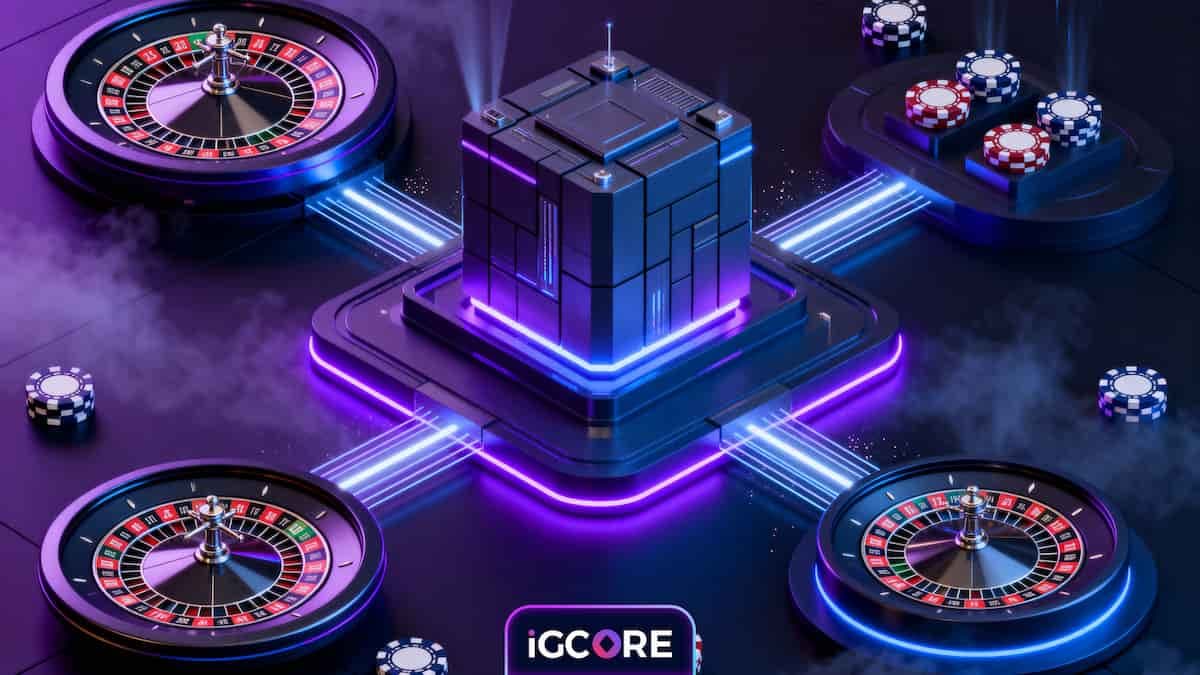
An iGaming platform provider is a B2B technology company that supplies the core modular infrastructure required to operate an online casino, sportsbook, or combined iGaming business.
Instead of a single rigid system, modern platforms are built as interconnected modules that can be deployed, scaled, or replaced independently as the business grows. Given the non-stop innovations in the sphere it is this scalability of the platform that permits introducing the changes while keeping the functioning of the platform smooth and uninterrupted. The concept discussed is an essential ingredient while implementing stable financial transactions, ensuring bets and spins go through successfully, players experience no lags, or delays. The list can still be continued, but the critical role of the scalability is undeniable for an iGaming platform. Let us have a look at the must-haves of modern iGaming platforms.
A typical iGaming software provider delivers core components such as:
- Player account and identity management
- Centralized wallet and payment infrastructure
- Game and sportsbook aggregation
- Risk management, responsible gaming, and compliance tools
- Reporting, analytics, and back-office control systems
This modular approach allows operators to adapt to regulatory changes, add new products, or enter new markets without rebuilding the entire platform. Some established providers, such as iGCORE, follow this architecture to support long-term scalability and efficiency.
At the same time, it is important to distinguish between commonly confused roles. Some of the concepts may entangle both operators and software providers in that they are quite close in meaning. However, there are some nuances that make the difference drastic to make the right choice and conduct successful business. Which are these different aspects?
iGaming platform provider – supplies the full operational backbone of an online casino platform or sportsbook platform, including player management, payments, compliance, and integrations.
Game provider – supplies individual casino content but does not operate the platform itself.
White-label reseller – offers access to an existing platform with limited customization and long-term flexibility.
Many iGaming platform providers also offer different product formats built on the same core infrastructure, including turnkey platforms, white label solutions, and iFrame Sportsbook products, which allow operators to add sports betting through a lightweight integration without rebuilding their core system. Some of the more advanced companies, such as iGCORE also have their in-house sportsbooks supported by their own odds feed, risk management tools, and bonus engine.
Why Choosing the right iGaming Platform Provider Makes a Difference in 2026?
In earlier stages of the industry, many operators could succeed with basic setups and limited functionality. However, in 2026 several structural shifts make platform selection critical.
Market Saturation
Most regulated and semi-regulated markets are already crowded. Differentiation now depends on operational efficiency, reliability, and user experience — all of which are directly influenced by the underlying casino platform software.
Regulatory Pressure
Governments and regulators are tightening requirements around KYC, AML, responsible gaming, and reporting. An iGaming software provider that cannot adapt quickly to regulatory changes becomes a liability.
Higher Player Expectations
Players expect fast payments, localized content, stable performance during peak events, and seamless cross-device experiences. Platform limitations quickly translate into poor retention and subsequent loss of players.
Technology Complexity
Modern platforms must integrate multiple game providers, payment systems, fraud tools, and analytics services. While a weak platform architecture leads to downtime, slow updates, and operational risk.
Whereas, not a very successful choice of platform may result in:
- Frequent downtime or performance issues
- Compliance violations and license risks
- Limited ability to enter new markets
- High migration costs when scaling becomes necessary
- Revenue Loss and Low Conversion
- Financial losses and limited control over margins
- Failed deposits
Consequently, choosing the right iGaming Platform Provider is a long-term business decision, rather than a short-term technical one.
Beyond these core considerations, operators should also evaluate the long-term partnership value that a provider may bring. Here included are the ability to innovate, introduce new features, and respond proactively to market trends on the side of the software provider. A forward-thinking platform provider continuously invests in product development, user experience improvements, and emerging technologies such as AI-driven personalization, advanced risk modeling, and real-time analytics.
Equally important is the transparency and communication between the operator and the provider. Predictable release cycles, and responsive support teams contribute significantly to operational stability. Moreover, operators should assess how flexible the platform is in terms of integrations, customization, and third-party collaborations, as rigid systems may limit future growth opportunities.
Ultimately, the right choice is not only about the current situation, but also about how well the platform aligns with the operator’s long-term vision, scalability goals, and ability to remain competitive in an increasingly demanding global iGaming landscape.
Key Factors to Consider When Choosing the right iGaming Platform Provider
Platform Stability & Performance
Massive spikes and global events, as well as the incremental growth of financial transactions and traffic impose the urgent need for stability and the capacity to manage peak traffic. Stability and performance protect revenue, reputation and players’ trust, which is supported by almost zero downtime and load balancing.
Scalability is not just about traffic volume. It also includes adding new markets without architectural changes, supporting additional products or verticals, API-driven modular architecture. The ultimate goal is to avoid rebuilding the platform every time the business grows.
Game Aggregation & Content Flexibility
Wealth and diversity of the content at the website are one of the key drivers of player engagement and loyalty. To this end, access to multiple casino and game providers plays an important role. At the same time, the technical background should be maintained for the best results. Hence today unified aggregation instead of the fragmented is valued in the market.
Due to the point discussed above, namely scalability, a flexible platform allows operators to adjust content strategy without rebuilding the entire system. Another unique point for competitive platforms today is the localized content tailored up to the needs of the market. Games and the core content should resonate with the audience to entice and retain. Localised digital engagement, platform-native content, and culturally attuned collaborations ensure further success and new opportunities for the operators.
Customization & Brand Control
Many operators start with white-label solutions but quickly encounter limitations. Important questions include:
- Is the frontend configurable?
- Can business rules and promotions be customized?
- Does the back-office permit to make modifications?
The right iGaming Platform Provider allows growth beyond basic white label iGaming platform constraints without need for full restructuring.

Compliance, Licensing & Security
Compliance is no longer optional or secondary. A mature platform should support:
- Integrated KYC and AML workflows
- Regional compliance logic per jurisdiction
- Secure data handling and audit trails
Operators targeting Africa, LATAM, or emerging markets should pay particular attention to local regulatory adaptability.
Mobile-First UI and Payment & Wallet Infrastructure
Payment speed and flexibility have a direct impact on the conversion and retention on the platform. Delay in payments is one of the main obstacles why players go to other platforms. Hence, a top-tier platform provider in 2026 must deliver full support for local payment methods and wallets, multi-currency and crypto capabilities, cards and Mobile money, especially for regions like Africa and LATAM.
Moreover, the 1-tap flows today are gaining popularity with the users and should be considered as a must-have priority by the software providers. With the massive shift to mobile gambling, the appropriate UI expands positions. One-click deposits, simplified navigation, face ID keep players engaged within the games, while payments take seconds to be completed.
AI-driven Real-time Personalization (10%)
The deployment of intelligent tools elevates the platform to a new level of efficiency. Advanced technologies allow for real-time analysis of large volumes of data on players’ behaviour and risk level, thus mitigating the risks for operators.
Such smart prompts rooted into deep numerical analysis lead to clever and targeted decision-making on encouraging players. Specifically, distribution of free spins, personalized bonuses, spinning a lucky wheel, promotional offers - all these are some of the examples for users’ motivation and further encouragement, as well as overall lifetime value.
Simultaneously, risky behaviour and possible fraud and abusers are proactively detected at an early stage which reduces the operational and financial losses on the platform.
However, not every provider's AI delivers equally on these promises — the gap between genuine machine learning and rebranded rule-based automation is wider than it might appear. Before committing to a provider, it's worth knowing what to look for: our guide on evaluating AI capabilities in an iGaming platform walks through the key questions to ask and the red flags to watch for.
Omnichannel Ecosystem (online + retail)
Considering today’s diverse and vast betting landscape and channels, a modern must support an omnichannel ecosystem of interaction with players. One of the most widespread and popular segments is the online system offering online registration, integrated payment gateways, and secure withdrawals.
Yet another, not less popular method today is retail betting. This includes dedicated software for land-based operations where cashiers assist the players with registration, deposits and withdrawals. This method is very popular in cash-first locations with limited internet penetration.
According to statistics in such environments, betting activity remains high, making retail channels a key driver of growth. This brings about a strong demand for software adapted to effective and multi-level tracking of agents who deal with the processes. Robust agent software systems provide full transparency and detailed monitoring of users activities, financial monitoring, reporting and interconnectivity within the system.
Advanced Analytics & Back-Office Intelligence
A competitive iGaming platform should also deliver intelligent back-office tools that support data-driven decision-making.
Operators need real-time information on player behavior, financial flows, betting patterns, and operational performance. This includes customizable dashboards, segmentation tools, and detailed reporting capabilities that allow teams to react quickly and strategically. Hence, a powerful back-office is a backbone of operations with adjustable tools for monitoring KPIs in real time, developing bonus strategies and campaigns, tracking profitability by market, product, or segment, identifying segments and many more.
Such deep analytical insights and intuitive control systems empower operators to make smarter decisions, reduce risks, and maximize revenue potential.
Common Mistakes Operators Make When Choosing a Provider
Experienced operators often highlight the same recurring mistakes:
- Choosing the most affordable option without understanding long-term limitations
- Ignoring scalability, assuming today’s setup will work tomorrow
- Underestimating compliance complexity, especially across multiple jurisdictions
- Locking into rigid platforms with limited exit or migration options
These mistakes usually surface after launch — when changes become expensive and disruptive.
How Established iGaming Platform Providers Approach These Challenges?
More established iGaming platform providers tend to focus on sustainability rather than speed alone. Their approach often includes:
- Modular platform architecture instead of monolithic systems
- Gradual scaling strategies aligned with business growth
- Built-in compliance tools adaptable to regional requirements
Some providers, such as iGCORE, emphasize scalability, modular design, and regional compliance support rather than a single solution for all cases. This approach allows operators to evolve beyond initial setups without platform replacement.
The key takeaway is not the provider name, but the mindset: platforms designed for longevity outperform those built purely for rapid deployment.
White Label vs Custom Platform – What’s Right for You?
Choosing between a white label iGaming platform and a more customized setup depends on business goals.
White label platforms may be suitable when:- Speed to market is the top priority
- Budgets are limited in early stages
- Customization needs are minimal
- Long-term brand differentiation matters
- Multiple markets or licenses are planned
- Advanced control over operations is required
Ultimately, the decision should be guided by the right iGaming Platform Provider, not by the product label alone. A good provider supports progression from white label to more customized models over time. So, it is also important to consider the transition path between models. Many operators begin with a white label solution to enter the market quickly, but later face limitations in customization, branding, and operational control. A forward-thinking provider offers a scalable migration path, allowing gradual transition toward a more flexible and independent setup without disrupting existing operations.
Additionally, operators should evaluate the level of data ownership and access provided under each model. Full access to player data, analytics, and reporting becomes increasingly important as the business grows and requires more sophisticated marketing and retention strategies.
Integration Ecosystem & API Flexibility
In 2026, no iGaming platform operates in isolation. The ability to seamlessly integrate with a wide range of third-party services has become a critical factor in platform selection. Operators increasingly rely on multiple providers for games, payments, CRM systems, fraud detection, affiliate tracking, and marketing automation. As a result, the flexibility and openness of the platform’s integration ecosystem directly influence its long-term viability.
A modern iGaming platform should offer well-documented, stable, and scalable APIs that allow operators to connect new services quickly without disrupting existing operations. This includes both inbound and outbound integrations, ensuring smooth data exchange across all components of the ecosystem. Platforms built with rigid or closed architectures often create bottlenecks, slow down innovation, and increase dependency on the provider for even minor changes.
Integration flexibility also plays a key role in time-to-market and competitive responsiveness. Operators must be able to add new payment methods, onboard additional game providers, or integrate region-specific services in a matter of days, not months. This is particularly important in emerging markets, where localization requirements and user preferences can vary significantly.
Furthermore, an open integration approach reduces long-term risk by preventing vendor lock-in.
Operators retain the ability to optimize their technology stack, negotiate better commercial terms, and replace underperforming partners without major system overhauls.
In a highly dynamic and competitive environment, platforms that support a modular, API-driven ecosystem empower operators to innovate faster, adapt more efficiently, and maintain full strategic control over their business development.
In 2026, success in iGaming will depend less on short-term tactics and more on structural decisions. Choosing the right iGaming Platform Provider means evaluating technology maturity, compliance readiness, scalability, and partnership mindset.
Operators should think beyond launch and focus on where the business needs to be in three to five years. A reliable iGaming software provider acts as a long-term partner, not just a technical vendor.
Another important consideration is the ability of the platform to adapt to emerging technologies and market trends. The iGaming landscape continues to evolve with innovations such as AI-driven personalization, advanced analytics, and new payment solutions. Platforms that are designed with future adaptability in mind allow operators to stay competitive without undergoing costly system overhauls.
Finally, the strength of the provider-operator relationship should not be underestimated. Transparent communication, responsiveness, and a shared long-term vision contribute significantly to operational success. In a complex and fast-moving industry, having a reliable and forward-thinking partner often becomes a decisive advantage.
By prioritizing stability, flexibility, and sustainable growth, operators position themselves to compete effectively in an increasingly demanding global iGaming landscape.

- What Is an iGaming Platform Provider?
- Why Choosing the Right iGaming Platform Provider Makes a Difference in 2026?
- • Market Saturation
- • Regulatory Pressure
- • Higher Player Expectations
- • Technology Complexity
- Key Factors to Consider When Choosing the Right iGaming Platform Provider:
- • Platform Stability & Performance
- • Game Aggregation & Content Flexibility
- • Customization & Brand Control
- • Compliance, Licensing & Security
- • Mobile-First UI and Payment & Wallet Infrastructure
- • AI-driven Real-time Personalization (10%)
- • Omnichannel Ecosystem (online + retail)
- • Advanced Analytics & Back-Office Intelligence
- Common Mistakes Operators Make When Choosing a Provider
- How Established iGaming Platform Providers Approach These Challenges?
- White Label vs Custom Platform – What’s Right for You?
- • Integration Ecosystem & API Flexibility
Related Articles

How to Start an Online Casino in South Africa?
Read more...

8 Must-Have Features of Modern iGaming Payment Gateways
Read more...